Everybody has a mother. Until such time as scientists discover how to produce healthy babies without the fuss and bother of a real pregnancy, that’s one definite truth we can share. This unity of origin for all humanity gives us a starting point for my meditation on motherhood this morning. I wish to touch upon the mother figure in religion, the idea of mother as the molder of personality and conscience, the troubling shadow of the dark mother, the origin of Mother’s Day and the concept of Gaia. In twenty minutes. Wish me luck, as you grant me the honour of your attention.
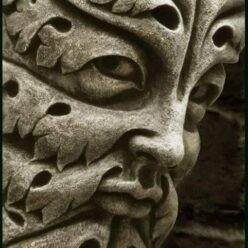
The mother figure in religion is pictured on the wall behind me. From the Venus of Willendorf to the three fold goddess Hecate, to the Virgin Mary, and all the countless faces she has taken in religions across the world, she has marked our culture and art from the day humans began to realize they could shape matter into a representation of something they had imagined.
The mother goddess was suppressed in our Judeo-Christian heritage and I have no idea why. It was political, some historians say, part of the rules that were put in place to stamp out the competing religions of the Old World. It was a joyous act of liberation from idolatry, in response to the revealed word of God through his prophets, say others. It would be a bit much to ask any Unitarian congregation to think about that for any longer than it took to dismiss the idea.
But I believe that from this suppression comes the requirement to restore balance. Unitarians have struggled with making the language they use in worship more inclusive, more respectful, and more accurate. If the audience for Unitarian thought is the whole world of people who wish to make peace, then we must in the process reach out to those who see the Divine as Mother, as well as to those who utterly reject the notion that any God is running the show.
To me, on a deeper level, the suppression of the mother goddess is a reminder that there are many valuable religious insights to be gained from many traditions. This means that I am required, as part of my faith walk, to be respectful of Pope John Paul II’s insistence that the Virgin Mary directly interceded on his behalf on the day that he was shot. It’s not something that he’ll ever be able to prove to me directly, but I’m obliged to take the Holy Father’s word for his conviction that the Mother of God saved him, and not to poke fun at the apparent incongruity of his belief. If I do otherwise, my prejudices are working harder than my faith.
This to me is the hardest thing about Unitarianism; that I am called to be respectful of the belief systems of others, so that I may truly demonstrate my faith in the essential oneness of all peoples.
All the earth’s peoples tell stories about the bountiful mother and her shadow the evil step-mother. The bountiful mother is characterized by a host of attributes, all of which read like merit badges at some saintly version of the Girl Scouts. Generosity, dignity, tireless effort, wise speech and wiser silence, healing hands, willing sacrifice, encouragement, cheerfulness, protectiveness, artfulness, and the ability to make each member of her family feel individually cherished and understood. Those of us who are fortunate to have experienced a mother who embodied these attributes — and I count myself as one – are forever blessed, but in an odd way we are burdened. It was not until I took the time to learn about the lives of people outside my family that I learned that not everybody is raised by a mother like that; the more I learned about my family history and those of the people closest to me the more it became clear that a mother can be an emotional millstone — a dark shadow across your whole life — as much as an emotional liberator and guide.
When I had children of my own, I was thankfully spared thinking about the responsibility of my new role in life because was too busy enjoying them when they were little. I had a very hands-on partner, and not a clue in my head about the emotional and ethical swamp that motherhood was going to toss me into.
Having my worst prejudices and most unlovable habits mimicked with appalling accuracy in the adorable accents of a four year old brought me up short. I cruised through the early years with nothing more complicated than diaper rash and finding childcare to deal with. Once they started talking, I was in serious trouble. Why is everything so hard? Why do nice people die? Why do you do one thing and tell me something else? How come daddy has to go away to Montreal? Why are you crying?
I have a pretty unorthodox take on childrearing — but I have help. We have done insane things like consult our children on which house to buy and taught them when it’s okay to swear and which illicit drugs we tried when we were adolescents. We have talked to them about our jail time and our scary experiences and our tough decisions and our biggest mistakes. But not all at once — then you just sound like you’re braggin’.
I have sometimes been too swift in reducing my apparent divinity as all-providing, all-knowing and all powerful to mere competence, which I gained by practice and by having a long honed skill to successfully heed the mistakes of others. On the whole, I prefer to be Mom rather than Mother Goddess to my children, and I think the transition was reasonably successful. I will always be Mom, but my next transition is into Peer, and I look forward to the day when my worries will be reduced to a manageable twitch from time to time, as opposed to floor walking midnight agony, while my far more sensible spouse is logging pleasant hours of unconsciousness.
The successful mother is always aware that she falls short, even if she doesn’t always see where the shortfall lies. The shadow mother, the dark mother, the insane mother, the wicked stepmother — none of these see the children they raise as being anything but a disobedient, willful, destructive piece of property.
Many of us in this room are in the cold penumbra of the shadow mother. She has as many faces as the beneficent mother who smiles on all we do. She is the grey chill of absence, caused by death, lingering illness, insanity, addiction, senility, irresponsibility, or maybe even a career too personally meaningful to sacrifice to motherhood. She is the harpy, the critic, the demon who devalues and eviscerates every good thing we do, using words that ring in our heads like a gong for weeks and years and decades afterwards. In her pettiness, her jealousy, her rage, her vindictiveness, her utter disregard for the truth of your being, she manages to personify everything horrible about human beings.
It is easy to be lost in the shadow of the dark mother, but there has always been a way out. We can make a choice to see her, name her, and avoid her, until we have the strength to deal with her from a place of compassion instead of fear. We can choose to find nurturing and intelligent women to associate with, until we learn what we have never before been taught. And we can learn to be as fierce as she was, to protect ourselves when we have to, even if the ferocity only comes out in a diary, or therapy. It is the dark mother who brings the lesson “Never again. It stops here. I won’t be that way. I choose life, I choose peace, I choose to nurture.”
I have a wicked stepmother story from my own family history. My mother’s great-grandmother died in childbirth when my mother’s grandmother was nine years old. She told her best friend on her deathbed to take care of her husband, and she married him a month later. My mother’s grandmother’s relationship with her stepmother was never easy. The stepmother ‘took against her’ so hard that she did something that echoes down the years as a lesson to peacemakers.
In those days a married couple lived with the in-laws for a few years until they established their own household. My mother’s grandmother came home from her wedding day, aged eighteen, and her stepmother told her: Take off that dress and feed the pigs.
When Aunt Olga — my mother’s grandmother’s third daughter — married a widower with two children, Grandma Rempel wept when Olga left with her new family to homestead in the north. Olga said, why are you weeping, mother? We aren’t going that far away. But Katharina wept for the stepchildren who would now suffer at her daughter’s hands as she had. Though she loved her daughter, loved all her children, the memory of her own stepmother was so powerful in her that she felt Olga would necessarily behave the same way. Understanding this, Olga made the decision ‘never again, it stops here’. Her stepchildren, now in their eighties, were loved; and their stepmother became not the mother they had lost, but the mother that they needed.
There are three other kinds of shadow mother. They are not evil. They are grieving. One is the mother who gives up her child voluntarily, to spare the child the torment of being raised by a woman who cannot afford it, emotionally or financially; one is the woman who cannot have a child and is consumed with longing for children; and the last is the woman who has had a child and lost that child. As we celebrate this mother’s day, let us spare a compassionate prayer for the women who struggle with infertility and loss, and whose experience of motherhood has more to do with feelings of grief, guilt, betrayal, anger and bewilderment than the fuzzy sentiments on a dime store greeting card.
Speaking of greeting cards with their canned messages, let me read you an extended and lightly edited quote from Barry Lank, a newspaper columnist in New Jersey. I was actually going to write a passage that included all of this information, but he did a better job than I can, so I’m borrowing it.
“Born May 1, 1864, Anna Jarvis was very close to her own mother Ann Marie Jarvis – they’re buried next to each other in a cemetery just outside the Philadelphia city limits. Ann Marie was active in promoting children’s health, and once organized an ad hoc “Mothers Friendship Day.” So after her mother died in 1905, Anna Jarvis poured her heart and money into promoting Mother’s Day. President Woodrow Wilson proclaimed it an official celebration on May 10, 1908.
Fifteen years later, Anna Jarvis was suing to make it stop.
By then, Mother’s Day had become the materialistic, commercialized pocket of excess with which we’ve all grown comfortable, and it wasn’t what Anna Jarvis had in mind. She filed a lawsuit to impede the Mother’s Day festival, and was arrested for disturbing the peace when she verbally abused some carnation dealers at a gathering of wartime mothers.
“A printed card means nothing except that you are too lazy to write to the woman who has done more for you than anyone in the world,” she wrote around this time. “And candy! You take a box to Mother – and then eat most of it yourself. A pretty sentiment.”
She died broke on Nov. 24, 1948 – the day before Thanksgiving, another holiday that’s gotten away from us. It turns out she never got married or had any children of her own. But she did have one offspring: Mother’s Day itself. Sadly, it grew up to be a great disappointment to her.”
I’d like to escape from the dime store now and get a new perspective. Pick your spirit up and rise, straight up, 180,000 kilometers up, and picture the many times reprinted photograph of our earth rising above the surface of the moon.
Hold that image in your mind. Is Gaia not the most beautiful object in the universe? Meditate upon the fleecy clouds, the mighty oceans, the volcanoes, the rivers, the reefs and waterfalls and geysers, the fabulous array of life and abundance and splendor. Marvel at the patterns of energy as life forms give way each before each in a dazzling, never foreseen display.
We are part of that process, that dance of creation and destruction, the endless recycling. Every breath we take has some component that cycled through the lungs of Mary the mother of Jesus, and before her a mother dinosaur, and before her slid under the gills of a trilobite. These things are beyond conscious awareness, how very close we are to Gaia, and yet it seems our brains have lagged behind our bodies in understanding our special relationship with Her. Today life is still good for most of us. We can walk into the woods and breathe the fragrant air of the temperate rain forest. We can paddle a canoe into a still place, miles from the noise and dirt and neediness of the city, and be one with that stillness. We can make decisions about where to go and what to do with our energy and money that respect Gaia.
Whether you personify earth as being our mother, or consider the earth to be an elaborate machine that demonstrates the tendency to become ever more complex, we can all agree that the earth deserves better treatment from all of us than it has had. So I return to my original theme. We each have one mother. We each have one planet to call home in the universe. And for those of us who are fanciful enough to see the earth as our mother, we can tap into the deep wellspring of human experience of our mother earth as sacred, accepting, unjudging, and ultimately benign.
Happy Mother’s Day.